How to Get a 5 on AP World History
Tips, tricks, resources, and the exact study plan that got me an A+ and a 5 on AP World sophomore year
How to Get a 5 on AP World History
7 continents, hundreds of civilizations, and 800+ years. How can you learn all that history in just one school year? That was the question I had on my first day of AP World History. I’d done well on APUSH, but AP World seemed like a whole different beast. Luckily, with the help of a great teacher, friends, and the Internet, I was able to succeed.
If you’re in the same scenario that I was in the beginning of the year, and want to crush it on the AP World exam, you’re in the right place. Here’s how I got an A+ in the class and a 5 on the exam, broken down step-by-step.
This article is meant to be a fairly comprehensive guide that, if followed properly, will substantially increase your preparedness for the Advanced Placement World History: Modern examination. However, I cannot guarantee any single result on your classwork and AP exam. Feel free to contact me if you have any questions, feedback, or want some more help with AP classes.
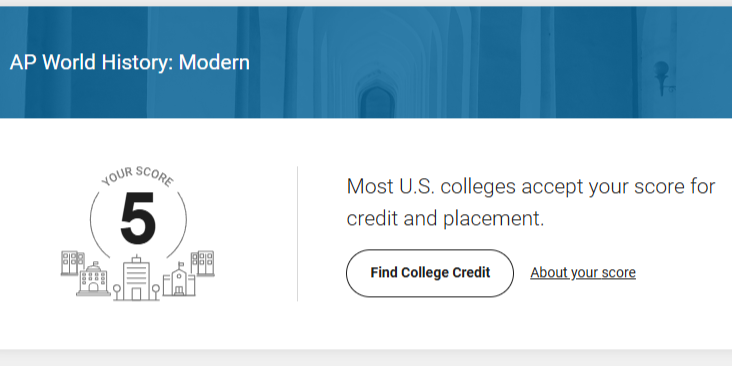
All of these tips, tricks, and resources helped me get this score, and a 97% average in the class
Table of Contents
This is a pretty long article, so here is a table of contents for your convenience.
- Understanding the Course and Exam - Jump
- Units of Study
- The Exam
- The Curve
- Resources I Used - Jump
- Heimler’s History
- AMSCO Textbook
- And More…
- My Ultimate AP World Study Plan - Jump
- Overall Breakdown
- Studying Per Unit
- Final Review / How to Cram
- Tips to Ace AP World - Jump
- General Tips
- MCQ Portion
- Writing Portions
- Final Thoughts - Jump
- You Got This!
- Contact Me
- More AP Guides - Jump
- AP Precalculus
- AP Computer Science Principles
Understanding the Course & Exam
Units of Study
The course is broken up into 9 units, but focuses on 4 time periods. It can be pretty confusing to jump around continents and time periods, so understanding how units and events fit together will be crucial. The order of topics in AP World is not strictly chronologicial. Period 1 covers units 1-2 and 1200-1450; period 2 covers units 3-4 and 1450-1750; period 3 covers units 5-6 and 1750-1900; period 4 covers units 7-9 and 1900 to the present.
Unit 1: The Global Tapestry (c. 1200 to c. 1450) - 8 to 10% of the exam
- 1.1: Developments in East Asia from c. 1200 to c. 1450
- 1.2: Developments in Dar al-Islam from c. 1200 to c. 1450
- 1.3: Development in South and Southeast Asia from c. 1200 to c. 1450
- 1.4: State Building in the Americas
- 1.5: State Building in Africa
- 1.6: Development in Europe from c. 1200 to c. 1450
- 1.7: Comparison in the Period from c. 1200 to c. 1450
Unit 2: Networks of Exchange (c. 1200 to c. 1450) - 8 to 10% of the exam
- 2.1: The Silk Roads
- 2.2: The Mongol Empire and the Making of the Modern World
- 2.3: Exchange in the Indian Ocean
- 2.4: Trans-Saharan Trade Routes
- 2.5: Cultural Consequences of Connectivity
- 2.6: Environmental Consequences of Connectivity
- 2.7: Comparison of Economic Exchange
Unit 3: Land-Based Empires (c. 1450 to c. 1750) - 12 to 15% of the exam
- 3.1: Empires Expand
- 3.2: Empires: Administration
- 3.3: Empires: Belief Systems
- 3.4: Comparison in Land-Based Empires
Unit 4: Building a New Nation (c. 1450 to c. 1750) - 12 to 15% of the exam
- 4.1: Technological Innovations from 1450 to 1750
- 4.2: Exploration: Causes and Events from 1450 to 1750
- 4.3: Columbian Exchange
- 4.4: Maritime Empire Established
- 4.5: Maritime Empires Maintained and Developed
- 4.6: Internal and External Challenges to State Power from 1450 to 1750
- 4.7: Changing Social Hierarchies from 1450 to 1750
- 4.8: Continuity and Change from 1450 to 1750
Unit 5: Revolutions (c. 1750 to c. 1900) - 12 to 15% of the exam
- 5.1: The Enlightenment
- 5.2: Nationalism and Revolutions in the Period from 1750 to 1900
- 5.3: Industrial Revolution Begins
- 5.4: Industrialization Spreads in the Period from 1750 to 1900
- 5.5: Technology of the Industrial Age
- 5.6: Industrialization: Government’s Role from 1750 to 1900
- 5.7: Economic Developments and Innovation in the Industrial Age
- 5.8: Reactions to the Industrial Economy from 1750 to 1900
- 5.9: Society and the Industrial Age
- 5.10: Continuity and Change in the Industrial Age
Unit 6: Consequences of Industrialization (c. 1750 to c. 1900) - 12 to 15% of the exam
- 6.1: Rationales for Imperialism from 1750 to 1900
- 6.2: State Expansion from 1750 to 1900
- 6.3: Indigenous Responses to State Expansion from 1750 to 1900
- 6.4: Global Economic Development from 1750 to 1900
- 6.5: Economic Imperialism from 1750 to 1900
- 6.6: Causes of Migration in an Interconnected World
- 6.7: Effects of Migration
- 6.8: Causation in the Imperial Age
Unit 7: Global Conflict (c. 1900 to present) - 8 to 10% of the exam
- 7.1: Shifting Power After 1900
- 7.2: Causes of World War I
- 7.3: Conducting World War I
- 7.4: The Economy in the Interwar Period
- 7.5: Unresolved Tensions After World War I
- 7.6: Causes of World War II
- 7.7: Conducting World War II
- 7.8: Mass Atrocities After 1900
- 7.9: Causation in Global Conflict
Unit 8: Cold War and Decolonization (c. 1900 to present) - 8 to 10% of the exam
- 8.1: Setting the Stage for the Cold War and Decolonization
- 8.2: The Cold War
- 8.3: Effects of the Cold War
- 8.4: Spread of Communism After 1900
- 8.5: Decolonization After 1900
- 8.6: Newly Independent States
- 8.7: Global Resistance to Established Order After 1900
- 8.8: End of the Cold War
- 8.9: Causation in the Age of the Cold War and Decolonization
Unit 9: Globalization (c. 1900 - Present) - 8 to 10% of the exam
- 9.1: Advances in Technology and Exchange After 1900
- 9.2: Technological Advances and Limitations After 1900: Disease
- 9.3: Technologicial Advances: Debates About the Environment After 1900
- 9.4: Economics in the Global Age
- 9.5: Calls for Reform and Respponses After 1900
- 9.6: Globalized Culture After 1900
- 9.7: Resistance to Globalization After 1900
- 9.8: Institutions Developing in a Globalized World
- 9.9: Continuity and Change in a Globalized World
The Exam
The updated exam for 2027 lasts 3 hours and 15 minutes, which is probably more like 3.5 - 4 hours depending on your school’s test day procedures. It’s broken up into 2 sections, with a 10 minute break in-between.
Section 1:
55 Multiple Choice Questions (MCQs)
- 55 minutes
- 40% of your score
- Pick the best answer out of 4 choices
- All time periods
- All stimulus based; primary and secondary sources
- 1 minute per question
- If you spend more than 2 minutes on a question, flag it and move on
1 minute break
3 Short Answer Questions (SAQs)
- 40 minutes
- 20% of your score
- Write 3 sentences for each part A, B, and C of each question
- #1: 1-2 secondary text sources
- #2: 1 primary text source
- #3: 1 primary or secondary non-text source
- Each SAQ focuses on a different historical period
- ~4 minutes per part A, B, and C
- If you spend more than 5 minutes on a part, flag it and move on
10 Minute Break:
Grab some chips or some water, and get ready for a whole lot of typing.
Section 2:
1 Document Based Question (DBQ)
- Recommended 60 minutes, including 15 minute reading time
- 25% of your score
- Write an argumentative essay using evidence
- 7 primary or secondary sources
- Updated for 2027: “covers a wider chronological range”
1 Long Essay Question (LEQ)
- Recommended 45 minutes
- 15% of your score
- Write an argumentative essay using evidence
- No sources, but a brief introductory statement
- Given 1 prompt to answer
The Curve
Some students think that, just to get a 5, they have to get a 90% or even higher on the exam. This is untrue. While you should shoot to get as high of a raw score as you can, you really only need a ~75% to get a 5. There are tons of AP World score calculators out there, and they all generally agree that a 75% is a 5. Here is the rough breakdown:
| Raw Score | AP Score | What does this mean? | % Received Score (2025) |
|---|---|---|---|
| 75-100% | 5 | ✅ Excellent! Most colleges will accept this. | 14% |
| 62-74% | 4 | 🎉 Great job! Some colleges will accept this. | 36% |
| 49-61% | 3 | 👍 Nice! A few colleges will accept this. | 16% |
| 34-48% | 2 | 😐 You’ll have a better foundation for college. | 26% |
| 33-0% | 1 | 🧠 You challenged yourself with college level coursework. | 8% |
Fun fact: Mathematically, the average score on the 2026 AP World exam was not a 3, but a 3.22
I would recommend shooting for a 80-85% to be solidly in the 5 range. Try to get a 45/55 on MCQ, 7/9 on the SAQs, 5/7 on the DBQ, and 4/6 on the LEQ. You can adjust these numbers as needed if you’re better at multiple choice questions or writing.
Resources I Used
This is the list of the main resources I used in preparation for AP World, and my review of them. This list is in no particular order.
Heimler’s History (YouTube Channel)
My rating: ⭐⭐⭐⭐⭐
Cost: Free
Heimler carried me through APUSH, and continued to deliver for AP World. His videos are engaging, snappy, and cover every single topic you need to know. Some people bought his Ultimate Review Packet on his website, but I don’t see much of a need for that. There are lots of free resources online that are great. I used his videos to study for exams and study for the AP exam. He provides great explanations of the course content, and has videos explaining the various written responses and strategies.

We 💖 Heimler
High School Test Prep (Website)
My rating: ⭐⭐⭐⭐⭐
Cost: Free
This site had some good practice questions, as well as tests for each unit. It was a great way to review how well I knew each unit, and provided AP-style multiple choice questions. I didn’t look at the FRQs, but I would assume they are of a similar high quality.
Knowt (Website)
My rating: ⭐⭐⭐⭐ ☆
Cost: Free
Knowt provided ample FRQ practice questions and grading for them. The site is very AI-heavy, and also has a lot of restrictions for those not paying for its premium tier. Overall, it served my intended use of having lots of FRQ questions to practice with and grade.
Other Resources
These are the other resources that I used briefly.
⭐⭐⭐⭐ ☆ - AMSCO Advanced Placement World History 2nd Edition (Textbook): I was also provided this textbook by my school, and it is highly recommended. It has concise topic overviews, and numerous MCQs and FRQs for every topic. I didn’t use this textbook a ton, but it was pretty useful. If you want a physical copy, you can probably find a discounted one online. You may also be able to find free digital copies online.
⭐⭐⭐ ☆ ☆ - Lumisource (Website): This website was decent and provided lots of MCQs for content review. However, the questions were not AP-level, and quite clearly AI generated. I would not rely on this for studying, just for content review.
⭐⭐⭐ ☆ ☆ - Khan Academy AP World Course (Website): This course was fine for an overview of topics, but not very in depth or up to the standard I normally find from Khan Academy. Use it to gain a broad understanding of topics before the class, but don’t expect it to cover AP-quality questions or info.
Best Resources
If you only used 2 resources to study for the AP World History exam, I would recommend Heimler’s History videos and High School Test Prep. Heimler provides a great overview of topics and general tips and tricks, while High School Test Prep provides MCQ questions and FRQs with minimal AI slop. Overall, you should make sure to use a variety of resources (videos, books, articles, practice questions) to ensure that you retain the most information and are prepared the best for the AP World exam.
My Ultimate AP World Study Plan
I studied for ~30 hours for the AP World exam, which was significantly less than the time I spent studying for APUSH. At this point, I had learned how to increase the quality of my studying and decrease the amount of hours wasted. Here is my exact study schedule, broken down by unit.
Overall Breakdown
I split up my studying based on topic, and based my time on each topic on how difficult I felt it was.
I would start by watching the Heimler’s history video for the topic, and taking notes. Then, I would do MCQs on Lumisource and Khan Academy to review the information. I would end with FRQs on Knowt, and do a High School Test Prep unit test if I had just finished a unit. This took me ~45 minutes each day.
Full Content Review - 30 Days
- Day 1: Topics 1.1-1.2
- Day 2: Topics 1.3-1.4
- Day 3: Topics 1.5-1.6, Unit 1 Review
- Day 4: Topics 2.1-2.2
- Day 5: Topics 2.3-2.4
- Day 6: Topics 2.5-2.6, Unit 2 Review
- Day 7: Topic 3.1
- Day 8: Topic 3.2
- Day 9: Topic 3.3, Unit 3 Review
- Day 10: Topic 4.1
- Day 11: Topics 4.2-4.3
- Day 12: Topics 4.4-4.5
- Day 13: Topics 4.6-4.7, Unit 4 Review
- Day 14: Topics 5.1-5.3
- Day 15: Topics 5.4-5.5
- Day 16: Topics 5.6-5.7
- Day 17: Topics 5.8-5.9, Unit 5 Review
- Day 18: Topics 6.1-6.2
- Day 19: Topic 6.3
- Day 20: Topics 6.4-6.5
- Day 21: Topics 6.6-6.7, Unit 6 Review
- Day 22: Topics 7.1-7.3
- Day 23: Topics 7.4-7.5
- Day 24: Topics 7.6-7.8, Unit 7 Review
- Day 25: Topics 8.1-8.3
- Day 26: Topics 8.4-8.6
- Day 27: Topics 8.7-8.8, Unit 8 Review
- Day 28: Topics 9.1-9.3
- Day 29: Topics 9.4-9.5
- Day 30: Topics 9.6-9.8, Unit 9 Review
Last Minute Review - 7 Days
The last week leading up to the exam is critical. If you haven’t studied at all, follow this framework. Even if you’ve already studied, you should still do this. It’ll help cement more knowledge in your mind, and help you feel more prepared for the actual exam.
6 Days Before: Mock Exam
- Take a full length practice test
- You can use one from High School Test Prep, the AMSCO textbook, or anywhere else
- Score the test and calculate your expected score online
5 Days Before: Units 1-2
- Watch the Heimler videos for any topics you are confused on
- See if you can explain the topics to someone else
- If not, you need to study those topics more
4 Days Before: Units 3-4
- Watch the Heimler videos for any topics you are confused on
- See if you can explain the topics to someone else
- If not, you need to study those topics more
3 Days Before: Units 5-6
- Watch the Heimler videos for any topics you are confused on
- See if you can explain the topics to someone else
- If not, you need to study those topics more
2 Days Before: Units 7-9
- Watch the Heimler videos for any topics you are confused on
- See if you can explain the topics to someone else
- If not, you need to study those topics more
1 Day Before: Light Review
- Brush up on any topics you really need help with
- Overall, don’t stress yourself out - last minute cramming won’t help
- You got this!
Tips to Ace AP World
General Tips
These tips can apply to any class, but are especially important for AP World.
Actually Pay Attention
I cannot emphasize this enough. Even when class seems boring and you’re falling asleep (I had it bright and early at 7:30am), pay attention. It’s a tip that seems so simple and not worth mentioning, but you would be surprised how many people I saw scrolling on their phones or falling asleep just days before unit exams or our midterm. If you pay attention and are engaged in the class, you will do better. In addition, your teacher will like you more, giving you a better chance at getting a grade rounded up (not that you’ll need that with this guide).
Do the Textbook Readings
For my class, we had (roughly) weekly textbook readings. They would be 30-60 pages, and cover a lot of material that we didn’t cover in class. I know a lot of people who used ChatGPT to take their notes for them, which ultimately didn’t help them at all. Don’t be that person. If you take the notes, you’ll remember things better for your unit exams and the AP exam.
Have Fun
Not everyone likes history, and I understand that. However, you can still find ways to have fun in class and with the material. If there’s a certain part of history that you really like or find interesting, take some time to research it and break away from your studying. If you engage more with the coursework, you’ll remember it better.
Multiple Choice Questions
- Each question will normally have 2 answers that are untrue, a distractor answer that is close, and the correct answer. Cross off the 2 obviously wrong ones first. That turns each question from a 25% chance to a 50% chance.
- I would recommend reading the question first, so you have an idea of what you’re looking for. As you read the stimulus, come up with your idea of what the correct answer is. Finally, read the answer choices, cross off the two wrong ones, and select the answer that most aligns with your idea.
- Answer choices that say always, never, or other definites are often incorrect. History is nuanced, and you generally cannot make statements like “Every person in Ancient China followed Neo-Confucianism” or “No Europeans had scientific knowledge”.
- In your head, try to justify why each answer choice is wrong. Outside the time period, infactual, irrelevant to the topic of the question, makes a definite statement, just feels wrong, etc.
- Skim the source, but read the question and answer choices closely so you don’t get tripped up by a not or least likely.
- Work through the exam in 3 passes. Start by going through and answering the ones that you know right off the bat. Then, go back and do the ones that require a little more thought. Finally, go back through every question (if you have time) and double check your answers.
Short Answer Questions
- I follow the framework of TEA for SAQs: You should have one topic/thesis sentence, one evidence sentence, and one analysis sentence connecting the evidence to the topic.
- Pay attention to the first word. Is the SAQ asking you to identify, explain, compare, or something else. If it asks you to explain, don’t just identify an event/development.
- Each part a), b), and c) should take you roughly 4 minutes, giving you more than a minute per sentence.
- Part c is often the hardest part of the SAQ, so you may want to block off more time for that part.
Example: One negative effect of increased interconnection in the period c. 1200 to c. 1450 was the spread of the Bubonic Plague. (Topic) Starting in the mid-1300s, the Bubonic Plague spread throughout Afroeurasia, decimating up to half of the population in some regions. (Evidence) This spread was facilitated by the peacefulness of trade routes, like the Silk Road, and ease of connection in this period, especially under the Pax Mongolica. (Analysis)
Document Based Question
Rubric Breakdown:
- Thesis: 1pt, requires you to make a claim that can be defended and has a clear point and line of reasoning. Something like “Bad economies caused migrations” won’t cut it. Use the formula of X, as evidence by A, B, C. X should be your claim (ie. “Migration in the 19th and 20th centuries was primarily motivated by those seeking economic opportunities, as evidenced by…”), and A, B, and C should be your reasons or map points (example of 1 reason: “Asian immigration to the Western Coast of the United States”). You need a specific claim or argument that you’re making, and 3 specific reasons that you can elaborate on with evidence later in the DBQ.
- Contextualization: 1pt, requires you to describe context, before, after, or during the time period, that relates to your claim. You should be setting the scene for your argument. If you are talking about World War II, try discussing the Great Depression, Weimar Republic, World War I, or other events leading up to WW2. This should be 3-4 sentences, and forms your intro paragraph when coupled with the thesis.
- Evidence: 3pts
- Using Documents: 2pts, requires you to use 6 of the 7 documents to support your argument relating to the prompt. Shoot for using all 7 if possible. Don’t just quote the documents, actually analyze them and how they relate to your claim. If you just want one point, use at least 3 documents in a way that relates to the topic of the prompt.
- Outside Evidence: 1pt, requires you to bring in at least 1 piece of outside evidence that isn’t in your documents. This point tests your background knowledge. This needs to be a specific person, law, event, group, or other tangible thing related to the prompt. You need to be specific and explain how it related to the prompt.
- Analysis and Reasoning: 2pts
- Sourcing: 1pt, requires you to HIPP at least 2 documents and explain how that makes them or their point more relevant to your point. HIPP stands for historical context, intended audience, point of view, and purpose. Try to vary which element of HIPP you use for each document.
- Complexity: 1pt, requires you to demonstrate a complex understanding of the topic. You can do this by explaining multiple themes, perspectives, causes/effects, similarities/differences, or continuties/changes. You could also explain both continuity and change, similarity and difference, and cause and effect. However, I believe the easiest way to get this point is to use all 7 documents effectively, or HIPP at least 4 documents.
Tips:
- Use the 15 minute reading period wisely. Highlight key details, and group the documents into which of your three map points they support. One document can support more than one point.
- Clearly cite documents by using phrasing like “As historian John Smith says in Document 1, …” or cite with parentheses (Document 1).
- The general structure is intro (thesis, context), body paragraph 1, body paragraph 2, body paragraph 3, and closing (counterclaim, tie it all together).
- Even if you have no idea what the DBQ is about, you can get the thesis, context, and evidence points pretty easily. Don’t give up and write a letter to the AP reader, try to get as many points as you can.
Long Essay Question
Rubric Breakdown:
- Thesis: 1pt, just like the DBQ.
- Contextualization: 1pt, just like the DBQ.
- Evidence: 2pts
- Identify: 1pt, identify at least 2 specific pieces of evidence related to the prompt
- Support: 1pt, use those pieces of evidence to support the argument related to the prompt
- Analysis and Reasoning: 2pts
- Reasoning: 1pt, demonstrate historical reasoning like cause and effect, continuity and change, or comparison.
- Complexity: 1pt, you can provide nuanced and complex understanding just like the DBQ. You can also use 4 pieces of specific evidence to support your argument as opposed to 2.
Tips:
- Choose the prompt that you know the most about, not the one that seems the easiest or most fun
- Use the same structure as a DBQ for simplicity (intro, body paragraphs, closing)
- For the first 5 minutes, write down every event, person, or concept that could be relevant to the topic in that time period. This will help you find your pieces of specific evidence much faster.
- Don’t use generalizations like “people didn’t like this.” Instead, say “working-class immigrants were angry over wage reductions and poor conditions, fueling strikes such as the 1877 Great Railroad Strike.”
Final Thoughts
AP World, like most AP histories, is a challenging course, but it can also be fun and interesting. If you put in the work and follow this guide, I’m confident that you can get an A in your class and a 5 on the exam.
The key is repetition and consistency. If you keep working hard, even when it seems like you can’t do anything right or don’t remember anything, the class will become much easier.
On exam day, just have faith and confidence. Stressing an hour before the exam won’t get you anywhere. Get a good night’s sleep, eat a good breakfast, get to school on time, and be ready to take your AP exam. You got this!
If you need any more help, or have questions or comments, feel free to let me know by contacting me. I’m happy to help. If this post helped you out, consider sharing it with your friends and classmates. Enjoy your AP World journey!
More AP Guides
As of writing, I’ve taken 7 AP exams and gotten 5s on all of them, earning an AP Scholar with Distinction Award.
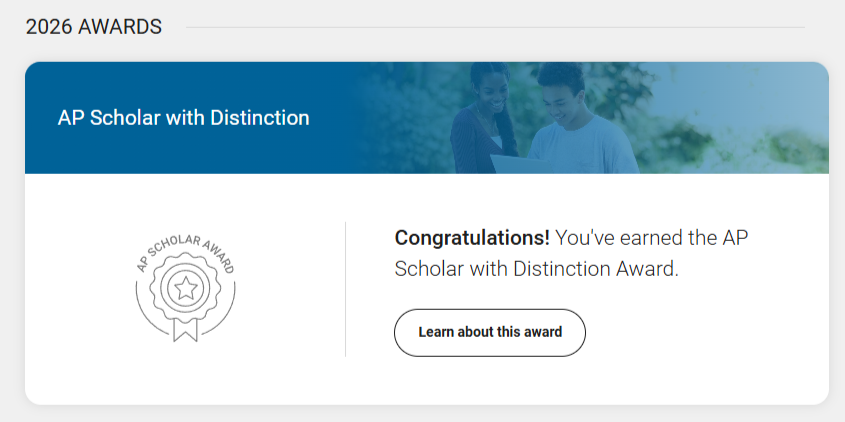
This list includes AP US History, AP Precalculus, AP CS Principles, AP World History, AP Calculus AB, AP CS A, and AP Environmental Science.
If you want to do the same thing, feel free to check out my other guides here.